
Queensland Casinos: Hotels, Dining and Practical Details
 Available in AU
The guide separates accommodation from gambling and highlights details to check about rooms, dining, events and online casino searches.

Table of Contents
- Staying at a Queensland Casino: Hotels and Rooms
- Poker Rooms, Poker Machines and the Limits of the Available Evidence
- Breakfast, Buffets and the Resort Experience
- Online Casino Searches and Australia’s Legal Boundary
- Accommodation Near a Queensland Casino
- Contact, Location and Practical Information
- Opening Hours, Events and the Casino’s Public Life
- Spa, Address and Dress-Code Searches: What Can Be Confirmed
- Restaurants and Dining at a Queensland Casino
- Food and Pool Searches Beyond the Casino Floor
Staying at a Queensland Casino: Hotels and Rooms
A casino hotel joins two kinds of place under one name: somewhere to sleep and somewhere built around gambling. That pairing can make a room seem like part of the entertainment, when it remains an accommodation booking with its own terms, price and practical details. The distinction matters. A casino’s presence does not, by itself, establish that rooms are available on site or that a particular stay includes access to anything beyond the room.
The phrase “Queensland casino hotel” can describe a property that combines both functions, but it is not a guarantee about any particular venue. Even the word hotel can carry different expectations: a guest may picture a full-service stay, while a listing may use the term more narrowly. Room categories, views, bed arrangements and facilities are details to establish from the property’s own current description, rather than infer from the casino name.
Deals deserve the same care. A lower displayed rate may be tied to particular dates, payment conditions or cancellation rules; a package may bundle elements that are not useful to every guest. The headline price is only one part of the cost of a stay. Taxes, deposits, booking conditions and the treatment of changes or cancellations can shape the actual commitment. Without those terms in view, “deal” is a mood, not a comparison.
Choosing an online casino while in Queensland calls for checking the details that matter to you, such as licensing, deposit requirements and payout options. Use these short notes as a reference when considering your options for 2026.
Payout speed: crypto under 1 hour, PayID 1-3 business days · Min. deposit: A$20 (A$30 to qualify for the bonus) Ricky Casino lists crypto payouts in under 1 hour and PayID payouts in 1–3 business days. The minimum deposit is A$20, or A$30 to qualify for the bonus.
License: Curacao eGaming (Hollycorn N.V., since 2017) · Min. deposit: A$20-30 (depends on the offer) Playfina Casino is listed under a Curacao eGaming licence held by Hollycorn N.V., which has been in place since 2017. Its minimum deposit ranges from A$20 to A$30 depending on the offer.
License: Curacao Gaming Control Board OGL/2023/176/0095 (Hollycorn N.V.) LuckyVibe is listed under Curacao Gaming Control Board licence OGL/2023/176/0095, held by Hollycorn N.V.
License: Curacao eGaming OGL/2023/174/0082 (Dama N.V.) · Min. deposit: A$15 LevelUp Casino is listed under Curacao eGaming licence OGL/2023/174/0082, held by Dama N.V. Its minimum deposit is A$15.
License: Curacao eGaming OGL/2024/923/0383 (Antillephone N.V.) · Min. deposit: A$30 WinSpirit Casino is listed under Curacao eGaming licence OGL/2024/923/0383, held by Antillephone N.V. The minimum deposit is A$30.
License: Curacao · Payout speed: crypto 30-60 minutes, fiat 1-5 days · Min. deposit: A$10 Wild Tokyo lists crypto payouts in 30–60 minutes and fiat payouts in 1–5 days. Its minimum deposit is A$10, and it is listed as licensed in Curacao.
License: Curacao – Antillephone N.V. (Versus Odds B.V.) · Min. deposit: EUR 20 Thor Casino is listed under a Curacao licence associated with Antillephone N.V. and Versus Odds B.V. Its minimum deposit is EUR 20.
License: Tobique Gaming Commission · Payout speed: crypto ~10-15 minutes, fiat 1-5 days · Min. deposit: A$30 SkyCrown is listed under the Tobique Gaming Commission. It lists crypto payouts in about 10–15 minutes, fiat payouts in 1–5 days, and a minimum deposit of A$30.
License: Curacao eGaming (Dama N.V.) JeetCity Casino is listed under a Curacao eGaming licence held by Dama N.V.
Payout speed: crypto 30-120 minutes, fiat 24-72 hours · Min. deposit: A$30 MrPacho lists crypto payouts in 30–120 minutes and fiat payouts in 24–72 hours. Its minimum deposit is A$30.
A sensible comparison begins with the room itself. The booking should identify the room category, occupancy conditions, included services and any restrictions that affect the stay. If a listing describes a view, a larger room or a particular bed configuration, those specifics should appear in the booking details rather than rest on an assumption drawn from photographs. Images can suggest atmosphere; they cannot settle the terms.
The casino setting can also distort the way accommodation is judged. A guest may spend little time in the room, or may value quiet and rest above proximity to the gaming floor. Either way, the hotel’s appeal is not a substitute for understanding what the accommodation provides. Nor should a room booking be treated as evidence of any special access or privilege unless the offer expressly says so.
There is a useful boundary between a hotel within a casino property and a hotel somewhere else in the area. A nearby hotel may be a practical alternative, but its distance, price and relationship to the casino are separate matters. The shared word “casino” does not make two properties one establishment.
For a Queensland stay, the name of a casino is therefore only a starting point for identifying the accommodation being considered. The decisive details are attached to the room and the booking: what is being reserved, what the rate covers, and what happens if plans change. Those details are more useful than a broad promise of a casino experience, because a night’s lodging is not a wager and should not be treated like one.


The language of hospitality often makes an ordinary transaction sound seamless. A room is still a room, with conditions that deserve to be read as carefully as the price. The glamour can wait.
Poker Rooms, Poker Machines and the Limits of the Available Evidence
A poker room, a poker tournament and a bank of Electronic Gaming Machines (EGMs) belong to different parts of casino life, though the word poker can make them seem closer than they are. A room or tournament points towards a card game played against other people, with its own rules, entry conditions and schedule. EGMs are machines offering games of chance. Online pokies are their digital counterpart, but their mechanics should not be mistaken for a description of a live poker table.
That distinction matters when interpreting references to poker at a Queensland casino. A search for a poker room concerns a particular facility; a tournament search concerns an event, which may depend on dates and registration arrangements. A mention of EGMs says nothing by itself about whether card games or tournaments are available. Nor does the presence of a sports bar, if one is listed elsewhere, establish anything about poker. These are separate amenities, each requiring its own confirmation.
The same care applies to “casino rooms”. In ordinary use, that phrase may mean hotel accommodation, a room within the building, or a space set aside for an activity. It is not a reliable synonym for a poker room. The setting and context determine the meaning. This is one of those small ambiguities that can make a venue description sound more informative than it is.
- Distinguish between poker rooms, tournaments, and EGMs
- Confirm specific facility availability directly with the venue
- Treat each gaming activity as a separate amenity
- Assume “casino rooms” always means a poker room
- Mistake online pokie mechanics for live poker
- Use the presence of one amenity to infer another
Online pokies offer a clearer point of comparison because their underlying process can be described precisely. Each game is powered by a Random Number Generator, or RNG. The RNG produces outcomes for individual spins; it does not keep a record of whether earlier spins won or lost. Each spin is therefore independent, and a previous result does not make a particular result more likely on the next one.
There is no accumulating memory in that mechanism. A run of losses does not place the game under an obligation to pay, and a recent win does not make another win due. The sequence can look meaningful to a person watching it, but the RNG does not read the sequence as a story. It simply generates the next outcome.
That explanation applies to online pokie spins, not to live poker. In a card game, players make decisions in relation to the cards and to one another; the result is not an RNG spin. A tournament, meanwhile, is an organised competition rather than a machine game. Treating these activities as interchangeable obscures what someone is actually trying to find: a card-playing space, a scheduled competition, or electronic games.
The phrase “poker machines” can cause a further mix-up. In Australia, it often refers to EGMs rather than to machines offering the rules and social format of poker. A machine’s name or theme may evoke cards, but that does not turn it into a poker room or a poker tournament. The distinction is practical, not merely verbal.


Venue details and event information also have a different life from the mechanics of a game. A tournament listing is tied to an organiser and a date; a room description concerns a physical facility. Those details cannot be inferred from general information about online pokies, just as an explanation of an RNG cannot establish what games are played at a particular table.
For anyone comparing Queensland casino offerings, the useful habit is to keep the categories separate: card-room facilities, tournament events, EGMs, accommodation and sports-bar amenities are not interchangeable clues. A venue can only be described accurately when each detail is attached to the right activity. Poker is a word with several jobs.
Breakfast, Buffets and the Resort Experience
Breakfast and buffet searches often treat a casino as though it were a single, self-contained resort: a place where a room, a morning meal, entertainment and a rewards scheme naturally belong together. The word resort does a great deal of work in that picture. It suggests a joined-up experience, but the label alone does not establish which facilities or services a particular Queensland property provides.
A breakfast buffet is a specific offering, not a safe assumption based on a casino’s size or reputation. It may be a separate service from other dining, with its own location, days of operation, booking conditions and price. Those details can change. A current venue page or direct confirmation is more useful than an old listing that repeats the word “buffet” without showing when the information applied.
The distinction matters especially for breakfast. A general restaurant listing does not confirm a breakfast service, and a breakfast menu does not confirm a buffet. Nor does the presence of a casino imply that food is served at every hour. These are ordinary details, but they shape the experience more than grand language about a resort does.
A breakfast buffet is a specific offering with its own location, prices, and booking conditions, rather than a guaranteed feature of every casino resort.
There is a small history of expectation in the word resort. It turns separate commercial functions into a promise of seamless leisure: sleep here, eat here, spend the day here. The phrase can describe a real arrangement, or merely lend atmosphere to a property. In Queensland, the practical question is not whether a casino sounds resort-like, but which services are actually attached to the venue and available on the dates in question. Atmosphere is not an itinerary.
Rewards searches belong to the same bundle of expectations, though they concern a different kind of relationship. A rewards programme may have conditions governing eligibility, points, benefits and how those benefits can be used. Its name, if one is given, is not a substitute for its current terms. A breakfast offer tied to membership, for instance, would need to be confirmed as an offer rather than inferred from the presence of a rewards scheme. No promise should be read into the word rewards by itself.
Employment searches sit at the edge of this resort picture. A person looking for casino work is not asking about breakfast, but the shared word can blur two very different purposes: spending time at a venue and seeking a job there. Vacancies, duties and application processes are specific to an employer and can change; the general idea of a casino resort does not establish that a particular role is open.
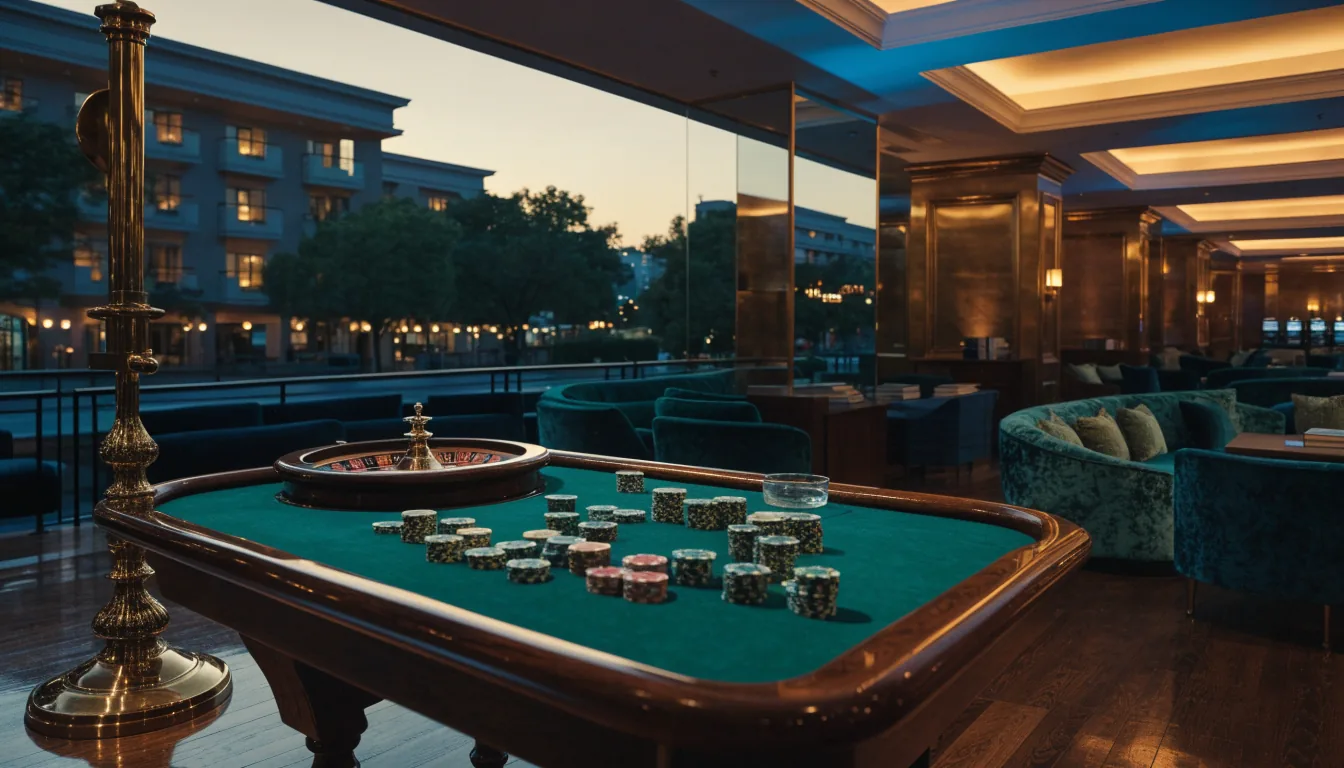

For anyone comparing a Queensland casino’s broader experience, the useful record is concrete: whether breakfast is served, whether it is buffet-style, what the current service conditions are, and whether any advertised benefit applies to the intended visit. Those details should be checked separately rather than assembled from a property label, an old promotion or a rewards headline.
A resort is a promise of convenience. The small print decides how much of it is real.
Online Casino Searches and Australia’s Legal Boundary
A Queensland casino is a physical venue; an online casino is a different legal proposition. The distinction matters because an Australian casino’s presence does not make its games available online, nor does an offshore website become an Australian service simply because it can be viewed from an Australian address.
The Interactive Gambling Act 2001 prohibits operators from providing real-money online casino games to people in Australia. That covers familiar formats such as pokies, blackjack and roulette. An Australian-run business therefore cannot lawfully offer those games online to people physically in the country. An Australian licence is not a route around that prohibition: online casino games are not a lawful service for local operators to provide.
Offshore platforms occupy a less tidy position, but not a regulated one. Australian players are not criminally liable merely for using an offshore casino, while the operator is not authorised under Australian law to provide prohibited online casino services here. That distinction can sound like permission. It is not a guarantee of access, consumer protection or a dependable way to resolve a dispute. The law draws its line around the service; the practical consequences fall unevenly on the people trying to use it.
Legal Boundary
Under the Interactive Gambling Act 2001, it is prohibited for operators to provide real-money online casino games to people in Australia.
Access can also be restricted. Online casinos may use a player’s IP address to identify location and block access from excluded countries. Where a game is region-blocked, it may not appear in the lobby or may fail to load. A specialist review has also reported that some providers have blocked Australian access in anticipation of possible changes to local gambling laws; that is a reported practice, not a rule applying to every game or platform.
A VPN can make a connection appear to come from another country, but using one to reach region-blocked pokies sites is against the operator’s terms and may lead to account suspension. It does not change the player’s physical location or turn a prohibited service into a locally regulated one. An account balance or unsettled withdrawal can become a practical problem if an operator acts on a terms breach. A shortcut with strings.
This is why searches for online casino games in Queensland should not be treated as a list of locally approved services. The legal status of offshore operators, the availability of individual games and an operator’s own terms are separate questions. A foreign gambling licence does not amount to an Australian licence, and no offshore approval makes online casino games lawful for an operator to provide to people in Australia.
The word “casino” can also lead in several directions. It may mean a physical venue, a game category, or a website offering real-money play. Requests involving bingo, dining or parking point toward venue information, not proof that an online service exists. Each belongs to a different practical and legal category.
For online casino games, the central boundary is clear: Australian operators cannot provide them to people in Australia, while offshore sites remain outside Australian regulation and may restrict access. The distinction is less glamorous than the lobby. It matters more.


Accommodation Near a Queensland Casino
Staying near a casino and staying inside one are different propositions. The first puts an independent lodging choice alongside a planned visit; the second makes the venue itself the base. For Queensland, that distinction matters more than any imagined promise of a bundled stay: a nearby property is not automatically connected to the casino, and a casino-branded offer should not be assumed to include outside accommodation.
The phrase “near the casino” also needs care. It can mean a short walk, a brief drive or simply a place in the same part of town. Without a confirmed property and its location, proximity cannot be translated into a reliable journey time. Maps, transport arrangements and the entrance actually being used all affect the practical meaning of close. A pin on a screen is not a travel plan.
Accommodation deals call for the same plain reading. A low headline price may not describe the full cost or the conditions attached to a booking. Dates, cancellation terms, taxes, included services and payment rules belong in the comparison, not in the fine print left for later. Where an offer is described as a casino package, its wording should make clear whether it covers a room at the casino itself or a separate nearby property. The label alone settles nothing.
Promotions can blur the boundary further. A lodging discount, a dining inclusion and a gaming incentive are not interchangeable benefits, even when presented together. Each has its own conditions, and an accommodation offer should be judged on the stay it actually provides rather than on an adjoining promise. The casino setting can make a package sound seamless. The booking terms may be less lyrical.
Attention: A property described as “near the casino” is not automatically connected to the venue, and proximity is a location fact, not a quality guarantee.
There is a modest social history in the appeal of nearby stays. Casinos have long been destinations as well as buildings: visitors arrive from elsewhere, while towns and cities absorb the traffic around them. Accommodation nearby serves that movement, but it does not make the lodging part of the casino or establish any particular standard. Proximity is a location fact, not a quality guarantee.
A careful comparison therefore starts with the property’s own booking information and an independently checked map. The name and address should match across the listing and booking page; the route should be considered for the relevant time of arrival; and the total price should be read alongside cancellation and payment conditions. If a listing says “near,” the map can supply what the adjective cannot. If an offer leaves a key condition unclear, the uncertainty is part of the offer.
For searches about Queensland casino accommodation deals, that approach avoids treating a phrase as proof of an arrangement. No particular nearby property, rate, availability or package can be presumed from the casino’s name alone. The sensible distinction is simple: confirm the lodging separately, then assess whether its location and terms suit the visit. Nearby is not included.
Contact, Location and Practical Information
A venue address is not a minor detail in a casino visit. It determines the route, the drop-off point and whether a map pin leads to the public entrance or somewhere less useful. Yet “Queensland casino” does not identify one address by itself. Without a specific property, a street location, contact number or car-park entrance cannot be stated reliably.

That distinction matters because map listings can flatten a complicated site into a single marker. A pin may identify the broader property, while vehicle access, pedestrian entrances and pick-up areas follow different routes. A general map can help with orientation, but it should not be treated as confirmation of current access arrangements. The practical destination is the venue’s own location information, matched against the property name and the intended entrance.
The same caution applies to parking. A search for a casino car park can imply that a public facility is available, where it is situated, or what conditions apply. None of those details follows from the word “casino”. Parking arrangements can be property-specific, and a map symbol alone does not establish opening access, eligibility, charges or restrictions. Those points belong to current venue information, not inference from a nearby road or building label.
Contact details require the same care. A phone number copied from an old directory may outlive the page that first published it. For a practical enquiry, the most dependable route is the casino’s official contact page, where the name and address of the operator can be checked together. If a number appears elsewhere, it should match that official listing before being used. A familiar-looking result is not the same thing as a confirmed contact.
There is also a difference between asking for a property’s general contact and asking about a particular service. A venue’s central line may not handle every question, and a listing may not say which department does. The useful information is therefore not simply a number but a clear connection between the contact channel and the purpose of the call. Where that distinction is absent, an official website is a better starting point than a third-party directory.
Parking and Access
Parking arrangements are property-specific; a map symbol does not establish opening access, eligibility, charges, or restrictions. Vehicle and pedestrian entrances may also follow different routes.
Maps have a similar limit. They can show a location in relation to surrounding streets, but they do not establish what is open to the public or where a visitor should enter. A venue’s own directions can supply that context; a bare map marker cannot. This is especially relevant when a property has more than one approach or when a visitor needs to distinguish a vehicle entrance from a pedestrian one. Small distinction. Real consequences.
The practical standard is modest: confirm the property name, use its own address and contact information, and check access details close to the visit rather than relying on an old listing. For Queensland casino contact details, a phone number, map or parking instruction should not be supplied unless it can be tied to a specific venue and a current official source. Better an unanswered detail than a confidently misplaced arrival.
Opening Hours, Events and the Casino’s Public Life
Whether a Queensland casino is open is a practical question, but the answer belongs to a particular venue and date. Opening hours can change, and a reopening announcement may refer to one part of a property rather than the whole operation. A headline alone is not a reliable account of what is accessible. The distinction matters: a temporary closure, a staged return and a full reopening are different events, even when public notices compress them into a single word.
The same care applies to development. A proposal, construction milestone and completed project describe separate stages, not interchangeable signs of progress. A review of a casino’s public life is stronger when it separates announced plans from changes that have actually taken place. It can also ask who benefits from development and how employment, entertainment and the surrounding community are presented—not merely how impressive a project sounds.


Employment claims need similar precision. A general statement about jobs does not establish that positions are currently available, what roles they involve or whether recruitment is ongoing. Those details belong to dated vacancy notices and employer announcements. Without them, claims about hiring would turn possibility into news.
Events are equally time-sensitive. A calendar can change, and an advertised performance or gathering is not proof of a continuing programme. The useful distinction is between a one-off event and a recurring feature, with the date and venue stated clearly. Queensland-specific schedules should not be inferred from the reputation of a casino brand or from events held elsewhere.
The word “open” can also carry more than one meaning. It may describe a venue’s general trading status, a particular area, or access during a stated period. An announcement that a casino has reopened does not, by itself, establish that every facility or activity has resumed. Precision is less glamorous than a launch, but more useful.
A menu search sits at the edge of this topic rather than at its centre. Menus can change with venue operations and event programming; a dated menu is a record of a particular offering, not a permanent promise. Restaurant choices and food facilities are best considered separately from the wider question of a casino’s public calendar.
There is a broader Australian distinction worth keeping in view. The Interactive Gambling Act 2001 restricts operators from providing real-money online casino games to people physically in Australia. That legal boundary concerns online services; it does not establish the opening hours, events or employment status of a physical Queensland venue. Different questions require different evidence.
Public Life
- Treat opening hours, reopenings, and vacancies as separate, date-specific claims
- Distinguish between announced development plans and completed projects
- Verify that a venue’s general trading status applies to all its facilities
- Separate physical venue information from online gaming legal restrictions
A useful review therefore treats hours, reopening, development, vacancies and events as separate claims, each attached to a date and a specific place. It does not turn an announcement into a settled fact, or a venue’s public image into proof of current activity. Small distinctions. Public life depends on them.
Spa, Address and Dress-Code Searches: What Can Be Confirmed
A casino’s public image often gathers several kinds of expectation under one roof: a place to play, perhaps a bar or spa, an employer, and a destination with its own rules of entry. Those expectations are not interchangeable. A spa is a specific facility, a dress code a venue policy, and an address a piece of practical information. None follows automatically from the word “casino”.
The appeal of a casino day spa is easy to understand. It extends the promise of a visit beyond gaming, turning a commercial venue into something closer to a resort. But that image can travel further than the details behind it. A spa should be treated as an established amenity only when the venue itself identifies the service and its terms. The same applies to bars: their presence, names and operating arrangements are matters for current venue information, not assumptions drawn from the broader idea of casino hospitality.
Dress codes are similarly local. They can differ between gaming areas, bars and special events, and a general impression of formality is not a policy. Clothing rules matter because they shape who feels welcome and how a venue signals its identity; they also tend to be enforced at the door, where interpretation becomes less abstract. A stated policy from the venue is more useful than a guess based on photographs or reputation.

An address has a different kind of authority. It identifies a particular site, not a whole region, and should be matched to the venue’s own current contact details before it is used for travel or correspondence. Queensland is too broad a label to function as a destination in itself. The distinction is mundane, but practical: a search phrase can name a place imprecisely, while a journey requires a street address.
Careers information belongs to yet another register. Casino employment may involve hospitality, gaming operations, administration or other work, but the existence of those broad job categories does not establish current vacancies, hiring conditions or a particular employer’s recruitment process. Those details change, and only the relevant organisation can set them out authoritatively.
Even “casino games” can point in different directions. In a physical venue, the phrase may refer to on-site gaming; online, it enters a tightly restricted legal setting. Under Australia’s Interactive Gambling Act 2001, operators cannot provide real-money online casino games to people in Australia. The same label does not mean the same thing in every context.
A facility, a policy and a legal service each require their own evidence. Search language tends to compress them. Reality does not.
Restaurants and Dining at a Queensland Casino
A restaurant listing can make a casino feel like a whole social world: somewhere to mark an occasion, meet before a show or linger after an evening out. But the phrase “Queensland casino” does not identify a single dining room. A restaurant name, menu, service style or location belongs to a particular property, and should not be carried from one venue to another simply because both are described as casinos.
The soundest place to establish the names of current dining venues at a property.
Used to clarify specific menus, service styles, and booking availability.
The only way to ensure that photographs or third-party listings remain current.
That distinction matters when comparing restaurants at a casino in Queensland. A property’s own current directory is the soundest place to establish which dining venues it names; the restaurant’s own information can then clarify what it serves and whether bookings are available. Third-party listings may be useful clues, but an old entry can survive a change of name, ownership or operating arrangements. A familiar photograph is not a current menu.
The word “restaurant” also covers different expectations. It may refer to a formal dining room, a casual place for a meal or a venue organised around a particular cuisine. Those descriptions are useful only when attached to a named, current establishment. Without that connection, claims about atmosphere, price, dishes or service would be decoration rather than guidance.
A rooftop bar is a separate proposition. Its name may suggest a view and a place for drinks, but the label alone does not establish that a Queensland casino has one, that it is open to the public, or that it serves a full meal. Bar and restaurant listings should therefore be read as distinct: one does not prove the other. A search result is not a floor plan.
The same care applies to photographs and menus reproduced elsewhere. Images can circulate after a venue has changed, while menus are especially liable to shift with season, staffing and supply. A dated listing may still describe a real place, but not necessarily the present offer. The practical question is not merely whether a restaurant has been associated with a casino; it is whether the association and details remain current.
For anyone comparing a casino restaurant with an independent dining venue, the useful details are concrete: the venue’s name, its stated location, the current menu and its booking arrangements. Those details should be confirmed for the specific property rather than inferred from broad labels such as “casino dining” or “Queensland casino restaurants.” The distinction is modest, but it prevents an appealing description from being mistaken for a confirmed destination.

Dining belongs to the public life of a venue, yet it is not interchangeable with the venue itself. A casino can be discussed as a destination without every restaurant, bar or view being assumed into existence. Specific names matter. So does the date.
Food and Pool Searches Beyond the Casino Floor
Food can mean a quick meal between other plans, a cluster of counters, or a sit-down restaurant. Those are different expectations, even when they sit beneath the same broad label of casino dining. A food-court search suggests interest in several casual choices gathered together; it does not establish that such a space operates at a Queensland casino. Nor does a general request for food identify a particular outlet, menu or service.
That distinction matters because a venue’s name can do more work in the imagination than in the evidence. A casino may be associated with a larger leisure complex, but association is not a floor plan. Nothing about the phrase “casino food” confirms where meals are served, what is available, or whether a food court is part of the property. A restaurant listing belongs to a separate question, and does not settle this one.

The pool carries a similar ambiguity. It might be imagined as part of a resort stay, a leisure facility, or simply an amenity attached to a well-known property. The word alone cannot establish that a pool exists, who may use it, or whether access is tied to accommodation. Those details require a venue-specific confirmation, not a guess built from the casino label.
Queensland’s casino experience is often pictured as a single destination, but practical amenities are not interchangeable. Food outlets, restaurants and pools each have their own operating arrangements; none follows automatically from the presence of gaming. The sensible boundary is plain: broad descriptions can indicate what someone hopes to find, but not what a property actually provides.
A modest distinction, but a useful one. Search terms are not facilities.
Are online casino-style games restricted in Australia?
Yes. The Interactive Gambling Act restricts Australian-based operators from offering online casino games such as pokies, blackjack and roulette. Offshore sites are not regulated under Australian law, even though it is technically not illegal for Australian players to use them.
Which pokies are geo-blocked from Australia?
NetEnt’s wide-area progressive jackpot games, including Mega Fortune and Hall of Gods, were blocked from Australian players. NYX Gaming/Next Gen titles such as Foxin’ Wins and Doctor Love were also region-blocked.
What is pokies region blocking?
It is a restriction that uses a player’s IP address to identify their location and prevent access to games in excluded countries. A blocked game may be absent from the lobby or fail to load.
What are the different types of pokies?
Examples include progressive jackpot pokies, which add a portion of bets to a growing prize, and buy-bonus games, which let players pay to enter a bonus round directly.
Prepared by the Golden Star Casino editorial staff.