Best Pokies in Canberra: Hours, Access and Location
 Available in AU
Venue hours, gaming-floor access and location searches are not the same thing; this guide explains what the available information can and cannot confirm.
Table of Contents
- When Canberra’s Pokies Are Open—and What “Open Now” Can Establish
- What a Pokie’s Return Figure Can—and Cannot—Tell You
- Online Pokies and the Legal Line for Australian Players
- Pokies Near Canberra Airport: What Location Searches Can Actually Settle
- Gaming Venues and Their Responsibilities on the Floor
- Why “24-Hour Pokies” Needs a Venue-Specific Answer
- Crown Casino and Canberra: A Search Query, Not a Verified Venue Guide
- Canberra CBD Clubs and the Limits of a Venue Search
- Pokies in Parkes: What the Available Information Leaves Open
- Cashless Pokies and the Newcastle Search Confusion
When Canberra’s Pokies Are Open—and What “Open Now” Can Establish
“Open” can describe a building, a bar, a dining area or a gaming floor. Those things may share an address without sharing a timetable. That distinction matters when someone wants to know whether pokies in Canberra are available at a particular moment: a venue’s published opening hours do not, by themselves, establish that its machines are operating.
A listing marked open now is best read narrowly. It indicates a reported status for the venue, not a live confirmation of every area inside it. A club or other hospitality venue may welcome patrons for one purpose while a separate area is unavailable. Conversely, a gaming area’s schedule may not match the hours shown for the wider premises. The word “open” is doing less work than it appears to.
Published hours are still useful. They can indicate when a venue expects to admit patrons or provide its listed services, and they help distinguish a daytime visit from an evening one. But a general business-hours panel is not a machine-by-machine status report. Nor does the presence of a gaming area on a venue website necessarily establish that it is operating at the instant someone checks.
Choosing online pokies for Canberra in 2026 calls for checking practical details as well as the games on offer. This list highlights the operator-specific licensing, deposit and payout information available for each entry.
Payout speed: crypto under 1 hour, PayID 1-3 business days · Min. deposit: A$20 (A$30 to qualify for the bonus) Ricky Casino lists a A$20 minimum deposit, rising to A$30 to qualify for the bonus. Its stated payout times are under an hour for crypto and 1–3 business days for PayID.
License: Curacao eGaming (Hollycorn N.V., since 2017) · Min. deposit: A$20-30 (depends on the offer) Playfina Casino is listed under the Curacao eGaming license held by Hollycorn N.V. since 2017. Its minimum deposit is A$20–30, depending on the offer.
License: Curacao Gaming Control Board OGL/2023/176/0095 (Hollycorn N.V.) LuckyVibe is listed with a Curacao Gaming Control Board license, OGL/2023/176/0095, held by Hollycorn N.V.
License: Curacao eGaming OGL/2023/174/0082 (Dama N.V.) · Min. deposit: A$15 LevelUp Casino is listed under Curacao eGaming license OGL/2023/174/0082, held by Dama N.V. Its minimum deposit is A$15.
License: Curacao eGaming OGL/2024/923/0383 (Antillephone N.V.) · Min. deposit: A$30 WinSpirit Casino is listed under Curacao eGaming license OGL/2024/923/0383, held by Antillephone N.V. Its minimum deposit is A$30.
License: Curacao · Payout speed: crypto 30-60 minutes, fiat 1-5 days · Min. deposit: A$10 Wild Tokyo lists a Curacao license and a A$10 minimum deposit. Stated payout times are 30–60 minutes for crypto and 1–5 days for fiat.
License: Curacao – Antillephone N.V. (Versus Odds B.V.) · Min. deposit: EUR 20 Thor Casino is listed under a Curacao license from Antillephone N.V., with Versus Odds B.V. named as the operator. Its minimum deposit is EUR 20.
License: Tobique Gaming Commission · Payout speed: crypto ~10-15 minutes, fiat 1-5 days · Min. deposit: A$30 SkyCrown is listed with a Tobique Gaming Commission license and a A$30 minimum deposit. Its stated payout times are around 10–15 minutes for crypto and 1–5 days for fiat.
License: Curacao eGaming (Dama N.V.) JeetCity Casino is listed under a Curacao eGaming license held by Dama N.V.
Payout speed: crypto 30-120 minutes, fiat 24-72 hours · Min. deposit: A$30 MrPacho lists payout times of 30–120 minutes for crypto and 24–72 hours for fiat. Its minimum deposit is A$30.
This is a small problem of language with a practical edge. Maps and listings compress complicated places into a single label, because a single label fits neatly on a screen. A venue does not. Its public-facing spaces, services and operating arrangements may differ, and a status badge cannot explain those differences. A clear answer needs to relate to the particular venue and the particular time.
The phrase “open now” also ages quickly. A page may show a venue’s ordinary hours, while an unexpected change affects the day in question. Search results can be cached or updated at different times; a displayed schedule is not the same thing as a live operational notice. For a decision that depends on arriving while the gaming floor is available, the most useful information is a direct, current statement from the venue about that area—not a broad label attached to the whole business.
That does not make public listings useless. They are a starting point, not a guarantee. A venue’s own current notice may clarify a temporary change, and direct confirmation can settle whether the relevant area is operating. If the information only says that the premises are open, the careful reading stops there. The machines remain a separate question.
Early-morning wording can make the distinction more pronounced. Someone looking for pokies before the day’s ordinary routine begins is not merely asking whether a hospitality venue has opened its doors. They need to know whether the gaming area is open at that time. The same applies to a late visit: an open restaurant, bar or reception area does not establish that pokies remain available. Broad hours cannot safely be extended from one part of a venue to another.
There is no single useful answer for all of Canberra. Opening arrangements belong to individual venues, and a citywide statement would flatten those differences into an assurance it could not support. Even a list of ordinary hours would answer only the schedule question unless it also made clear which facilities those hours cover and whether they reflect the day being checked.
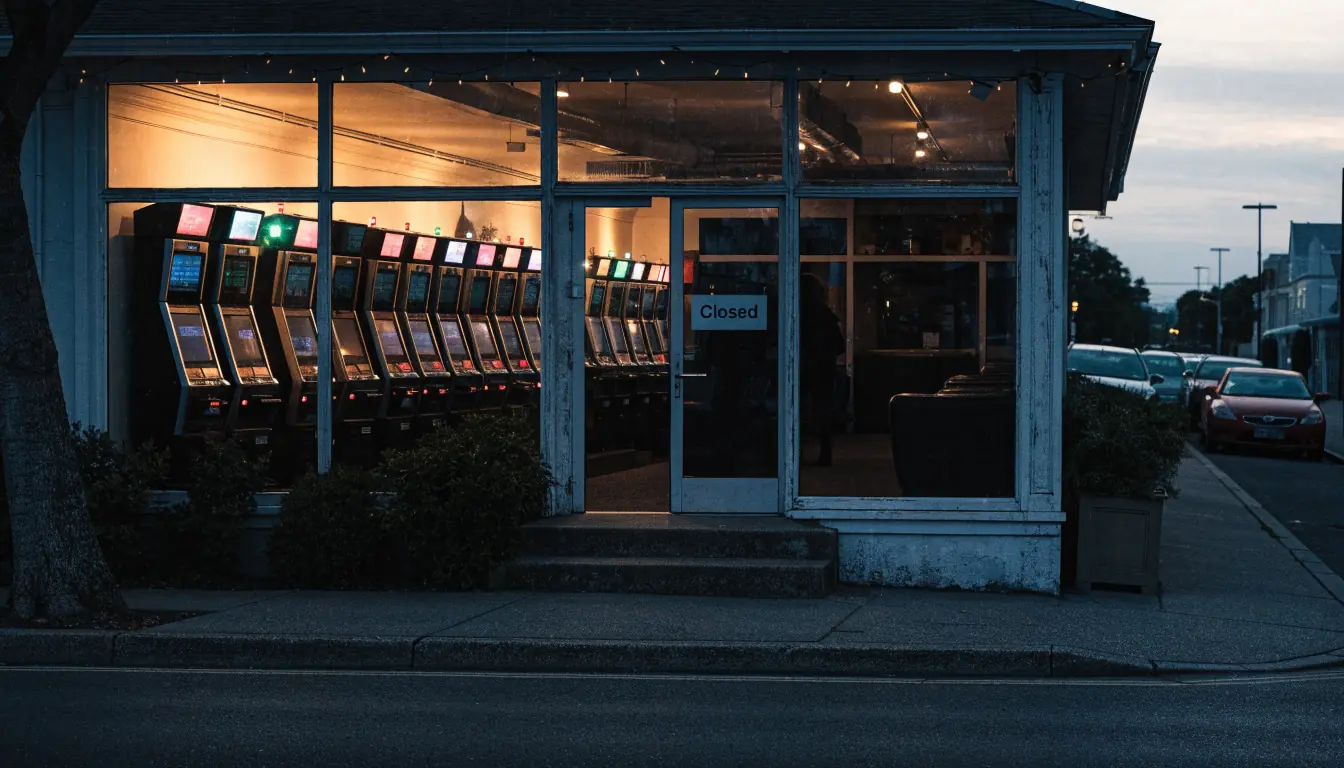
The distinction is worth keeping in mind because “open” sounds like a completed fact. In practice, it may be shorthand for a particular service, an ordinary schedule or a status last refreshed some time ago. “Pokies operating” is more specific. One phrase concerns access to a place; the other concerns the availability of a particular activity within it.
For anyone comparing Canberra venues, the useful test is therefore precise: does the information refer to the gaming area, and does it apply to the time being considered? If not, it establishes less than the wording may suggest. The published schedule can help plan a visit, but it should not be mistaken for confirmation that machines are running.
No drama. Just a distinction worth making.
What a Pokie’s Return Figure Can—and Cannot—Tell You
A pokie’s return figure can look like a neat answer to a messy question: which game pays better? It is not quite that. The percentage, commonly called return to player, describes an expected share of stakes across a very large number of spins. It is a long-run property of the game’s mathematical design, not a promise attached to a session, a machine or a player.
Attention: A return to player percentage is a long-run mathematical property, not a guarantee of winnings for a specific session or player.
That distinction matters when comparing games around Canberra. A higher stated return may indicate a larger theoretical share returned over time, but it cannot say what will happen in the next spin, or in the next hundred. A player might receive a win quickly on a lower-return game, or lose repeatedly on one with a higher figure. Randomness is not obliged to make the short run resemble the long one.
The mechanism is straightforward, if not comforting. A random number generator determines the outcome of each spin separately. Previous results do not load the dice for the next one: a run of losses does not make a win due, and a recent payout does not make another less possible. Each spin starts afresh. The machine has no memory in the human sense, and no concern for narrative justice.
A return figure also needs a precise identity. It belongs to a particular game configuration, not simply to a title remembered from somewhere else. A specialist review has reported that some providers let casinos choose between more than one return setting for the same pokie. Where that option is used, the same named game can carry different theoretical percentages in different casino settings. A familiar title, then, does not by itself establish an identical return.

The practical consequence is that comparisons need to be like for like. A figure published for one version or casino cannot safely be transferred to another merely because the screen art and game name match. The displayed information and the game’s own rules are more relevant than reputation or hearsay. If a return figure is unavailable or unclear, a confident ranking built around it is confidence without a foundation.
Even a clearly stated figure is not a forecast. It describes mathematical expectation over an enormous volume of play, not the distribution of results in one person’s evening. It does not show when a feature will appear, how long a losing stretch may last, or whether a session will end ahead. Nor does it make a game “due” after a dry spell. That last idea is a particularly durable piece of folklore.
The percentage is also not a measure of enjoyment, pace or how often a game produces small wins. Two games can have similar theoretical returns and still feel very different because their features, prize structures and volatility differ. Return alone cannot settle which one is more engaging, and “best paying” is too broad to serve as a mechanical description unless the exact game setting and measure are known.
For anyone weighing Canberra pokies by their stated returns, the sensible reading is narrow: the figure may help compare the long-run mathematics of matching configurations. It cannot identify a guaranteed winner, establish that the same game is configured identically everywhere, or promise a favourable individual result. A percentage is information, not prophecy.
That is the limit.
Return Figures
- Return percentages describe mathematical expectations over an enormous volume of play.
- A higher return figure does not guarantee a win in the short term.
- The same game title can have different return settings in different venues.
- Return figures do not measure game enjoyment, pace, or volatility.
Online Pokies and the Legal Line for Australian Players
The phrase “online pokies in Canberra” can describe a search made from the capital, but location does not create a local online casino market. Under the Interactive Gambling Act 2001, operators cannot lawfully provide real-money online pokies to people in Australia without a domestic licence. None have been issued. There is therefore no Australian-licensed online casino offering real-money play.
That distinction matters more than the wording of a website’s promotions. A no-deposit offer, a claim about high limits, or a promise of better-paying games does not turn an offshore service into a locally licensed one. Nor does a Canberra connection make online pokies a local venue product: the law applies to the service offered to people in Australia, not to the suburb or city named in a search.
The law’s target is the operator, not the individual player. Australians are not made criminally liable simply for playing on an offshore site that accepts them. But the absence of player liability is not the same as protection. If an offshore casino withholds winnings, Australian players have no legal recourse in Australia to compel payment. The distinction is stark: the operator may be acting unlawfully, while the player is left with little practical remedy.
Access is not endorsement
Some offshore gambling sites may accept Australians, although access is also subject to enforcement. The Australian Communications and Media Authority (ACMA) administers the Interactive Gambling Act 2001 and blocks access to illegal offshore gambling sites. Internet service providers are required to comply with ACMA’s blocklist. A site appearing in search results, or remaining reachable at a particular moment, is not evidence that it is lawful, locally licensed or endorsed.

Blocking is part of the regulatory response, not a promise that every prohibited service will disappear from view. Offshore operators can change domains, while the regulator’s blocklist addresses identified services. That can leave a misleading impression: availability on a screen looks like permission, though the two are not the same thing.
The limits of recourse make the distinction especially consequential. A domestic licensing framework could provide a point of legal accountability; Australia has no such licence for online casinos. A foreign licence, where an operator claims to hold one, does not supply Australian legal recourse if a dispute arises. The practical risk sits with the person whose money is on the account.
BetStop does not close this gap. It applies only to Australian-licensed operators and does not bind offshore sites; because there are no Australian-licensed online casinos, it cannot be treated as a safeguard against offshore online pokies. It is a boundary with a narrow reach.
Promotional language can make the legal line harder to see. “No deposit” describes an offer, not regulatory status. “High limit” or “best paying” describes a claim about play, not a legal guarantee or a route to recovering funds. The law does not become less relevant because an offer is framed as a bonus, nor does a Canberra label change who may lawfully provide the service.
Australia’s approach draws a firm line around the operator while leaving individual players outside criminal liability. It also leaves a gap between being able to reach a site and being able to enforce a right against it. ACMA can block access; it cannot make an offshore casino answerable to an Australian player who says a withdrawal was refused. That is the line worth noticing.
Legal Risk
Under the Interactive Gambling Act 2001, there are no Australian-licensed online casinos, meaning players have no domestic legal recourse if offshore operators withhold winnings.
Pokies Near Canberra Airport: What Location Searches Can Actually Settle
An airport-area search seems to promise a small, practical answer: a place to play before a flight, after a landing, or during a wait in the capital. Yet proximity is not a property of a venue name. It depends on where the venue is, what route is being measured, and whether the destination is actually a place with pokies rather than a business returned by a broad map search.
“Near” does a lot of work. It might mean within walking distance of a terminal, a short drive away, or simply somewhere in Canberra that feels reachable from the airport. Those are different claims. A pin on a map can establish an address; it cannot, by itself, establish that pokies are available there, that the venue is operating, or that the route suits a particular journey.
The same caution applies to searches for pokies at Canberra Airport. Airport wording can pull together businesses that serve travellers, locations bearing an airport label, and gaming venues elsewhere in the city. The phrase alone does not establish that pokies are inside the airport or that a gaming room forms part of its facilities. Search language is a rough instrument: useful for making a first shortlist, poor at drawing boundaries.
Distance is also more than a number. A venue may look close on a map while requiring a road journey, and a straight-line measure says little about access, traffic, or the time needed to get back to a terminal. Without a confirmed venue location and a defined route, claims about travel time are decorative rather than informative. That matters particularly around flights, where a casual estimate can become a missed departure.
The question is not settled by the word “Canberra”, either. A result may be in the wider region rather than close to the airport; a listing may refer to a suburb or a service area instead of a gaming floor. Searches mentioning North Canberra can narrow the geography, but they do not prove that a particular club or venue there has pokies. Nor does a result framed around the airport become an airport venue simply by appearing nearby in a list.
There is a useful distinction between finding a location and confirming what happens there. A current venue listing can help establish an address. The venue’s own information is more relevant to whether it offers pokies, while a direct enquiry can resolve details that a map entry leaves vague. These are separate checks, not interchangeable signs. A convenient result is not a verified gaming facility.


The broader context is less mysterious than the map. Pokies are regulated as venue-based gambling, while the legal position on real-money online casino games in Australia is different: operators cannot provide those services to people physically in the country without a domestic licence, and none has been issued. A location search for a land-based venue should not slide into an online alternative; the two are not the same service under Australian law.
For an airport journey, the sensible conclusion is modest: location tools can point towards places, but they cannot turn an uncertain listing into a confirmed nearby pokie venue. Proximity needs an address, a route, and confirmation that pokies are actually offered. Maps are not witnesses.
Gaming Venues and Their Responsibilities on the Floor
A venue’s responsibilities are less visible than its machines, but they shape what happens when play stops looking recreational. A directory of Canberra venues would not answer that question. The more useful distinction is between a venue’s public image and the duties its rules place on the people running the floor.
A report published by regionriverina.com.au describes a requirement taking effect from 1 July: where a venue has more than 20 gaming machines, a dedicated responsible gambling officer (RGO) must be present while those machines are operating. The threshold matters. This is not a claim that every club or gaming venue must have an RGO on every shift; the reported condition applies to venues above that machine count, and to the hours when their machines are in use.

That role gives responsible gambling a named presence inside the venue rather than leaving it as a slogan on a wall. The point is not that an officer can prevent every instance of harm. It is that concerns on the floor have somewhere to be noticed and handled as part of the venue’s operation. A title alone proves little; the responsibility has to exist in practice.
The same report describes a one-month grace period for venues to remove signage and put the new officer arrangements in place. A transition period acknowledges that rules require changes to staffing and the physical environment, not merely a revised notice. It also means that a report about the requirement should not be mistaken for evidence that every venue has already completed the transition.
Another duty described in the report is keeping a gambling incident register. It is intended to capture events, including situations in which a patron’s behaviour suggests they may be experiencing gambling harm or at risk of it. A register turns an encounter that might otherwise disappear into an informal conversation into something the venue records. The record is not the same as a remedy, but it makes the venue’s response less dependent on memory.
These obligations describe a framework, not a ranking of Canberra’s pokies venues. They do not establish which local venues have machines, how many they operate, or whether a particular venue meets a threshold. Nor does the presence of an RGO, by itself, tell the public how a concern will be resolved. The practical test is whether staff recognise troubling behaviour, respond appropriately and follow the processes required of their venue.
There is a small but important difference between a venue advertising a responsible approach and being accountable for one. The officer requirement and incident records belong to the latter category: duties attached to operating the floor, rather than assurances printed beside it. The machinery is obvious. The system around it is not.

Why “24-Hour Pokies” Needs a Venue-Specific Answer
“Open all night” sounds like a single condition. In practice, it can describe several different things: a building admitting patrons, a particular part of it remaining accessible, or pokies being available to play. Those are not interchangeable claims. A venue’s general opening hours, even if published, would not by themselves establish that its gaming area or machines operate throughout the same period.
That distinction matters especially in Canberra, where a broad claim about round-the-clock play cannot be attached to a venue without a venue-specific basis. “24-hour pokies” is not a useful description of a city as a whole. It is a claim about the operating arrangements of a particular place, and those arrangements may be narrower than the venue’s public-facing hours.
The wording can also conceal a change of subject. Someone looking for late access may find information about a venue that is open, but that does not settle whether pokies are available then. Conversely, a statement about gaming-machine operation does not necessarily describe every entrance, dining area or other part of the venue. The small print does the real work.
There is a social habit behind the search for an all-night room. Pokies are often treated as part of a venue’s atmosphere, as if the machines simply remain there, waiting, while the rest of public life closes around them. But access is arranged by people and institutions: opening policies, staffing and the boundaries between different areas of a venue. A machine’s presence is not a promise of uninterrupted access.
So a reliable answer needs to identify the venue and specify what is being described: the venue’s doors, its gaming area, or the operation of its pokies. Without that distinction, “open” is too broad to answer the question. And without a current, venue-specific statement, round-the-clock operation should not be assumed.
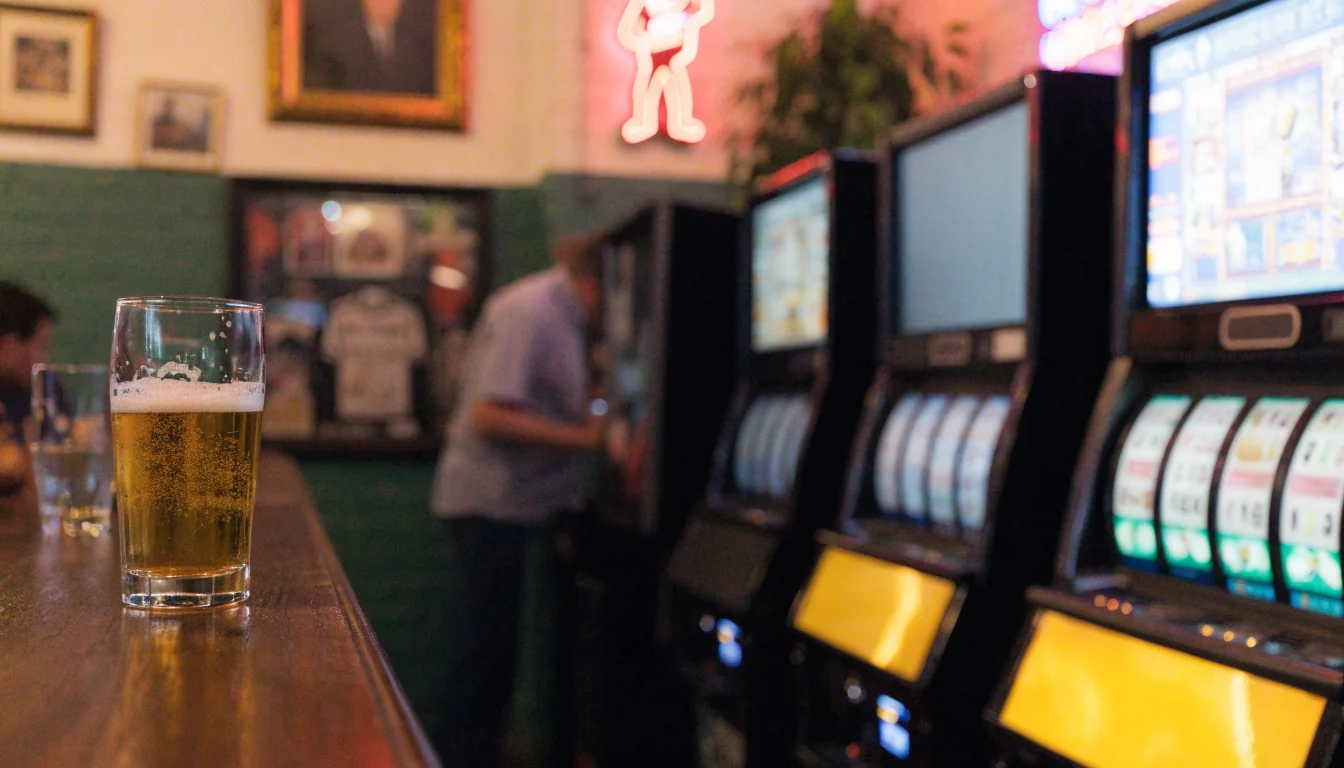
This is less satisfying than a citywide list of late-night options. It is also more honest. A general label cannot establish what happens at a particular venue during the night, and a familiar reputation is not a timetable. The details belong to the venue itself.
For Canberra, the responsible reading is therefore modest: a claim that pokies are available around the clock needs direct confirmation tied to the specific venue and the specific service. General opening information cannot carry that weight on its own. Round-the-clock access is a precise claim, not a mood.
Crown Casino and Canberra: A Search Query, Not a Verified Venue Guide
Putting Crown and Canberra in the same phrase does not establish that Crown operates a casino in the capital. A familiar name can travel easily through online listings, copied descriptions and conversational shorthand; a venue’s location cannot be settled by association alone. The distinction matters when the subject is not simply a name, but a particular room, its machines and the terms under which they operate.
That is why a request for Crown pokies in Canberra cannot, by itself, point to a verified local venue. Nor does it establish that a particular range of pokies, or a dedicated pokies room, is available there. Those are separate claims about a physical place and its facilities. Treating them as settled would turn a phrase into a directory entry.
The same care applies to the idea of a “best” pokies room. Best might refer to the atmosphere, the range of games, accessibility, opening hours or something else entirely. Without a confirmed venue and reliable details about what it offers, the comparison has no solid object. A confident ranking would sound useful while answering a question that has not yet been pinned to a real place.
Cash Payouts
Maximum payout queries can refer to a machine’s potential prize, a venue’s immediate payment capacity, or the handling of large wins; these are distinct matters.
Cash payouts introduce a different ambiguity. A request for the maximum cash payout on pokies in Canberra might mean the largest prize a machine can produce, the amount a venue can pay immediately, or the way a larger win is handled. Those are not interchangeable. A machine’s potential prize and a venue’s payment arrangements are separate matters, and a city-wide phrase cannot settle either one.
The wording also invites an easy mistake: assuming that a payout figure attached to a game applies everywhere that game appears. A number, if encountered elsewhere, would need to be tied to the actual game and venue conditions before it could describe a local experience. Without that connection, it is just a number looking for an address.
Crown, Canberra and pokies may belong in the same sentence as a description of what someone is trying to find. They do not, on their own, make a venue guide. Names are not maps.
Canberra CBD Clubs and the Limits of a Venue Search
A Canberra club and a pokie floor are not interchangeable ideas. “Club” can refer to a social organisation, a licensed venue or simply a place someone expects to find machines. A CBD result that fits the first meaning does not establish the others. Nor does a venue’s address, by itself, show that pokies are available there.
That distinction matters when trying to identify the best pokies in Canberra’s central business district. “Best” can describe a game’s features, a player’s preference or the convenience of a venue; it is not a reliable property of a postcode. Without confirmed details about a particular club and its gaming facilities, a ranked CBD list would turn a location clue into a claim.

The city’s commercial centre gives such searches an appealing neatness: a bounded area, familiar landmarks, an implied short walk between one place and another. But geography cannot fill in missing venue information. A map pin may locate a club; it cannot settle whether its machines operate, what games are available or whether the place suits a particular visit. Those are separate questions, and each needs current, venue-specific confirmation.
Self-exclusion belongs to a different kind of search. It is a responsible-gambling tool, not a method for locating a club. At venues, it concerns a person’s access to gambling; online, BetStop applies only to Australian-licensed operators and does not bind offshore sites. That limit is important, though it does not identify which Canberra clubs have pokies or explain their individual exclusion arrangements.
There is no shortcut from “CBD” to certainty. A result can point toward a relevant organisation, but the useful details are the ones the venue itself confirms: whether it has gaming machines and what arrangements it offers for exclusion. Until those details are established, naming a club as a pokies destination would be guesswork dressed as a directory.
The restraint is not evasiveness. It is the difference between a place on a map and a service actually available there. In a city search, that difference is the whole story.
Pokies in Parkes: What the Available Information Leaves Open
Parkes is a precise place-name, but precision in a search term does not make a venue directory. Someone looking for pokies in Parkes, Canberra, is asking a narrower question than someone searching for the Canberra CBD or places near the airport. Each points to a different patch of the map; none, by itself, establishes which venues have machines.

That distinction matters because local names can carry more than one meaning. Parkes may be intended as a Canberra district, not the town elsewhere in New South Wales. The wording alone cannot settle which location is meant, still less identify a club, hotel or other venue there. A confident list built on that ambiguity would look useful while quietly substituting assumption for geography.
Nor does the broad phrase “Canberra pokies” answer the local question. It describes a city-wide interest, while Parkes narrows the intended area. The word “best” narrows it differently: it asks for judgement, not merely proximity. Yet a judgement about the best pokies in Canberra would need reliable information about the games available at particular venues. A location label cannot supply that.
The practical distinction is between finding a place and establishing what happens inside it. A venue’s presence in a district would not, on its own, confirm that it has pokies; an online listing would not necessarily settle current availability. The machine floor is not a public map simply because the search box makes the request look tidy.
There is also a wider public context. In Australia, real-money online casino games offered to people in the country are prohibited under the Interactive Gambling Act 2001. That rule concerns online services, not a shortcut for identifying a physical venue in Parkes. Conflating the two would leave both questions unanswered.
For anyone trying to understand the Parkes-specific wording, the soundest reading is modest: it signals a desired location, not proof of a particular club or machine. The CBD and airport searches have their own geographic boundaries; Parkes should not be folded into either without evidence. A map can frame the question. It cannot, by itself, verify the answer.

Cashless Pokies and the Newcastle Search Confusion
“Cashless” can describe different things. In a venue, it may refer to how a person pays to play or handles funds at a machine. PayID is not evidence of that kind of system: it is a way to transfer money through Australia’s New Payments Platform, using an email address, mobile number or ABN as an alias. It is a bank-transfer method, not a label for a pokie’s payment equipment.
That distinction matters because a mention of PayID cannot establish that a Canberra venue has cashless pokies, or reveal how any machine there accepts payment. Nor does PayID say anything about a game’s return settings, fairness or a venue’s regulatory status. One mechanism moves funds between accounts; the other question concerns how a particular venue has arranged play. They are not interchangeable.
The Newcastle wording creates a separate ambiguity. It may join two place names because of the way a search was phrased, but that alone does not establish a connection between Canberra and Newcastle, identify a venue, or show that a particular pokie is available in either place. A location phrase is not a directory.
There is also a clear legal boundary around online play. Under the Interactive Gambling Act 2001, companies cannot provide real-money online casino games to people in Australia without a domestic licence, and no such licences have been issued. The restriction is aimed at operators rather than individual players; that does not make offshore services an Australian-regulated alternative. PayID’s presence as a transfer method changes none of this.

So “cashless” needs a specific setting before it means much: a venue payment arrangement, a bank transfer, or an online account are different subjects. Newcastle, meanwhile, remains a place name, not proof of a Canberra link.
Are online pokies legal for Australian players?
Yes, Australians can play on offshore sites that accept them, and the law targets operators rather than individual players. However, no Australian-licensed online casino exists, and players have no legal recourse in Australia if an offshore casino withholds winnings.
Are online pokies rigged?
Each spin is an independent random event determined by a Random Number Generator, so previous wins or losses do not determine the next result. The same game can also have different return settings at different casinos.
What does “wagering requirement” actually mean?
It is the amount you must bet, usually expressed as a multiple, before bonus winnings can be withdrawn. For example, a $500 bonus with a 40x requirement means $20,000 in bets; if the requirement applies to a $500 deposit plus a $500 bonus at 35x, it means $35,000 in bets.
What is the cost-benefit calculation of casino promotions?
Compare the bonus’s value with the required turnover, any cash-out cap on free-spin winnings, and withdrawal limits. For example, a $500 bonus at 40x requires $20,000 in bets, while a 35x requirement on a $500 deposit plus a $500 bonus requires $35,000.
What is the minimum PayID deposit?
PayID is treated like other qualifying deposit methods. Minimum deposits are usually AU$10–AU$20, though some operators accept AU$5.
Written by the editors at Golden Star Casino.