Pokies in New South Wales: hours and access
 Available in AU
Venue, bar and gaming machine hours can differ, so a general opening time may not confirm when pokies are accessible.
Table of Contents
- When NSW Pokies Are Open—and What “24-Hour” Really Means
- Pokie Names, Random Spins and the Meaning of RTP
- Online Pokies from NSW: Access, Restrictions and the Legal Grey Area
- Finding Pokies Near NSW Airports, CBDs and Local Venues
- Parkes Pokies: What the Available Evidence Can—and Cannot—Say
- Crown and NSW Pokies: A Search Term, Not a Verified Venue Guide
- CBD Clubs, Age Checks and NSW Player Protections
- Cashless Pokies and Newcastle Searches: No Verified Local Claims
When NSW Pokies Are Open—and What “24-Hour” Really Means
There is no single opening time for pokies across New South Wales. A venue’s doors, its bar or dining room, and its Electronic Gaming Machines (EGMs) may not share one timetable. A place described as open late is not necessarily open all night, and “24-hour” can be an imprecise label unless it clearly refers to the machines themselves. The phrase sounds definite; the practical arrangement may not be.
That distinction matters when someone wants to know whether pokies are open now, early in the morning or late at night. A venue listing can show general business hours without confirming when gaming facilities are available. A club may have different hours for different areas, or operate on a schedule that changes. A result marked “open” therefore does not settle the narrower question of whether its pokies are accessible at that moment.
The most reliable way to check a particular venue is to look for current information from the venue itself and, where the details remain unclear, contact it directly. That is less tidy than a statewide list of opening times, but it avoids treating an old directory entry or a broad “open now” label as a promise. Public holidays, special events and temporary changes can also make ordinary schedules a poor guide. A quick check before travelling is more useful than relying on a search result captured earlier.
Choosing online pokies for New South Wales means checking the details behind each option, not just the games on offer. This overview highlights the limited verified details available for each listed operator.
Payout speed: crypto under 1 hour, PayID 1-3 business days · Min. deposit: A$20 (A$30 to qualify for the bonus) Ricky Casino lists a minimum deposit of A$20, or A$30 to qualify for the bonus. Crypto payouts are listed as taking under an hour, while PayID payouts take 1–3 business days.
License: Curacao eGaming (Hollycorn N.V., since 2017) · Min. deposit: A$20-30 (depends on the offer) Playfina Casino is listed under a Curacao eGaming licence held by Hollycorn N.V. since 2017. Its minimum deposit is A$20–30, depending on the offer.
License: Curacao Gaming Control Board OGL/2023/176/0095 (Hollycorn N.V.) LuckyVibe is listed under Curacao Gaming Control Board licence OGL/2023/176/0095, held by Hollycorn N.V.
License: Curacao eGaming OGL/2023/174/0082 (Dama N.V.) · Min. deposit: A$15 LevelUp Casino is listed under Curacao eGaming licence OGL/2023/174/0082, held by Dama N.V. Its minimum deposit is A$15.
License: Curacao eGaming OGL/2024/923/0383 (Antillephone N.V.) · Min. deposit: A$30 WinSpirit Casino is listed under Curacao eGaming licence OGL/2024/923/0383, held by Antillephone N.V. Its minimum deposit is A$30.
License: Curacao · Payout speed: crypto 30-60 minutes, fiat 1-5 days · Min. deposit: A$10 Wild Tokyo lists a Curacao licence and a minimum deposit of A$10. Crypto payouts are listed at 30–60 minutes, while fiat payouts take 1–5 days.
License: Curacao – Antillephone N.V. (Versus Odds B.V.) · Min. deposit: EUR 20 Thor Casino is listed under a Curacao licence from Antillephone N.V., with Versus Odds B.V. named as the operator. Its minimum deposit is EUR 20.
License: Tobique Gaming Commission · Payout speed: crypto ~10-15 minutes, fiat 1-5 days · Min. deposit: A$30 SkyCrown is listed under the Tobique Gaming Commission. Its minimum deposit is A$30; crypto payouts are listed at around 10–15 minutes and fiat payouts at 1–5 days.
License: Curacao eGaming (Dama N.V.) JeetCity Casino is listed under a Curacao eGaming licence held by Dama N.V.
Payout speed: crypto 30-120 minutes, fiat 24-72 hours · Min. deposit: A$30 MrPacho lists a minimum deposit of A$30. Crypto payouts are listed at 30–120 minutes, while fiat payouts take 24–72 hours.
What “open” may mean
Opening hours are often presented as though a venue were one undivided room. In practice, a venue can contain several services with different operating times. Its restaurant might be serving while another area is closed; a front door may be open for one purpose without every facility being available. The word “open” gives a broad status, not necessarily a detailed account of which activity is operating.
For the same reason, “pokies open late” and “pokies open all night” are not interchangeable descriptions. Late opening says nothing precise about the closing time. A claim of round-the-clock access is stronger still: it implies continuity, not merely a long evening. Unless a venue’s current information specifically confirms machine access throughout the period in question, the phrase should be treated cautiously.
The distinction is easy to overlook because opening times are usually compressed into a single line. A listing might show a business as open, but that does not explain whether gaming access follows the same hours. Nor does a venue’s general schedule establish that every part of it operates continuously. The small print, if there is any, is doing the work that the headline cannot.
This is also why searches for a specific early-morning time can produce an answer that looks more certain than it is. A venue may have a listed opening time, but the listing may describe the premises generally rather than the availability of pokies. The relevant question is not simply whether the address is open. It is whether the particular facility sought is operating then.


Checking a particular time
For an early start or a late visit, current venue information should be read for what it actually says. If it gives only general hours, that is not confirmation of gaming hours. If the venue has a direct phone line or a current official page, those are better places to clarify the point than an undated third-party listing. A status badge can be useful, but it cannot supply detail that the listing does not contain.
“Open now” is especially time-sensitive. It can become wrong as soon as a venue changes its schedule, closes temporarily or updates its arrangements. It may also reflect the opening status of the premises rather than that of a particular service. For anyone planning a journey around a specific time, checking close to departure reduces the chance of arriving to find that the relevant area is unavailable.
A statewide label such as “NSW pokies open” cannot answer every local question. New South Wales covers many communities and many kinds of venue; a general statement cannot substitute for the operating information of an individual place. A venue-by-venue check is the practical answer, even when it lacks the neatness of a single statewide timetable.
- Check current information from the venue itself
- Contact the venue directly if details are unclear
- Verify machine access specifically
- Rely on old directory entries
- Treat a broad “open now” label as a promise
- Assume general business hours apply to pokies
The same caution applies to claims that a venue is open around the clock. The wording should say what is available continuously, not merely imply it. If it refers to the whole venue, that still may not establish that every service within it is available at every hour. If it refers to gaming, current confirmation from the venue is needed. Without that clarity, “24-hour” is a label, not a dependable travel plan.
Hours and returns are separate questions
Opening times also have no bearing on a machine’s payout percentage. A venue being open early, staying open late or describing itself as operating continuously does not show that its pokies return more. Schedule and game performance are separate matters. A late-night opening is a statement about access, not a measure of what a machine will pay.
That separation is worth keeping in view because searches about hours can sit beside searches about payouts, as if the two might be linked. They are not. The time a machine is available does not turn a particular session into a better prospect, and a venue’s schedule cannot tell anyone what an individual outcome will be. The clock measures access. Nothing more.
Long opening hours can make gambling easier to fit around ordinary routines, but convenience is not a reason to extend a session or raise stakes after losses. Chasing losses can deepen them; increasing bets to recover money is not a reliable remedy. A session budget set in advance, and kept within what a person can afford to lose, places a boundary around an activity that has no guaranteed return. Groceries and rent should never depend on a gambling outcome.


People using poker machines in NSW must be at least eighteen. Venues check identification for machine gambling, and underage gambling is unlawful. An advertised opening time does not change that requirement or guarantee access to everyone who arrives.
In the end, a useful answer about NSW opening times has to be local and current. Broad claims about early, late or continuous access can blur the difference between a venue’s general hours and the availability of its pokies. Checking the specific venue is less dramatic than a promise of all-night access, but considerably more useful.
Pokie Names, Random Spins and the Meaning of RTP
A familiar title can make a pokie seem knowable before a single spin. Names such as Dragon Link, Lightning Link, Wolf Treasure, Book of Ra, Gonzo’s Quest, Mega Moolah and Starburst circulate as shorthand for particular games and their features. But a title is not a forecast. Nor does recognition establish that a game pays better than another.
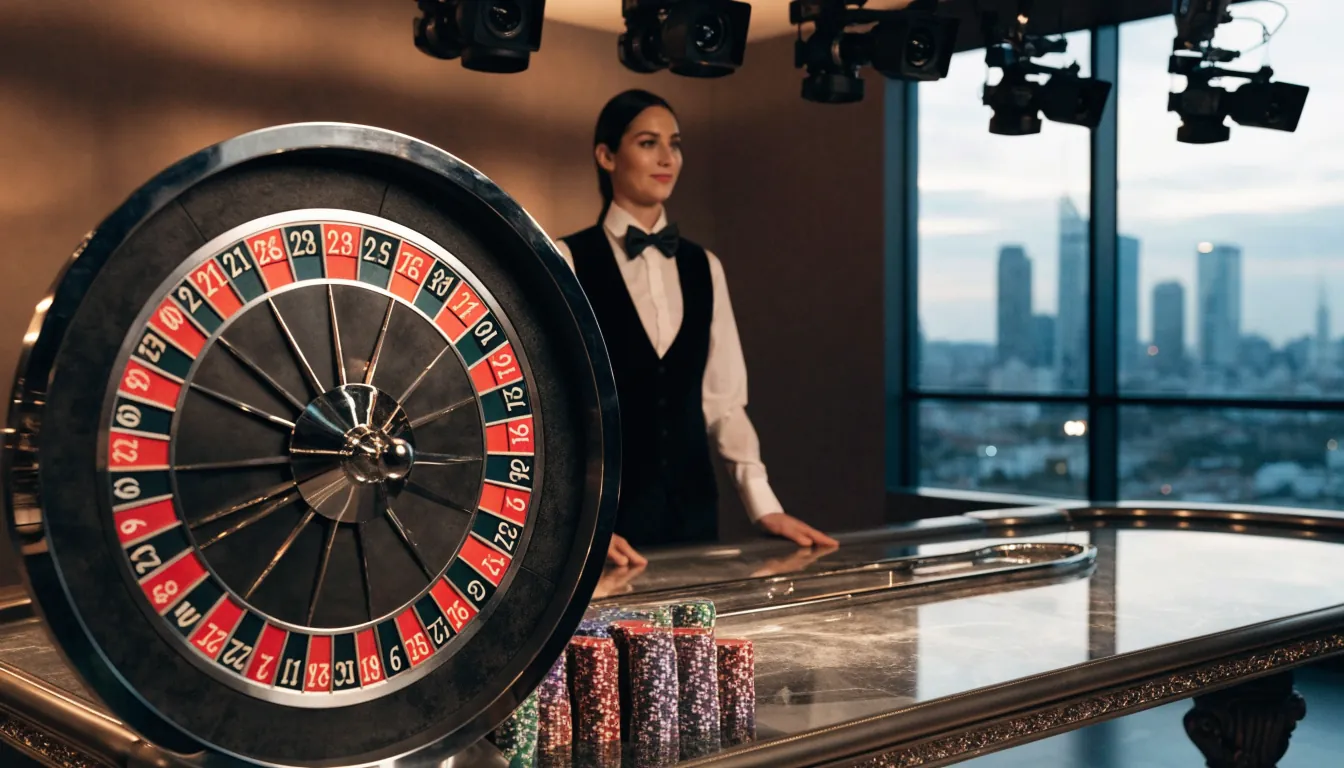
The machinery behind an online pokie is less romantic: each is powered by a Random Number Generator, or RNG. Its role is to produce the outcome for a spin. The important consequence is that spins are independent. A previous result does not alter the next one, whether the last stretch brought wins, losses or a conspicuous run of near misses.
The RNG does not keep score. A machine does not owe a payout because it has been quiet, and a recent win does not make another win more likely. The human mind is adept at finding a pattern in a sequence; gambling games are adept at offering sequences that invite one. Neither habit changes the underlying independence of the spins.
A Random Number Generator (RNG) ensures that every spin is independent; previous results do not alter the outcome of the next spin.
That distinction matters when people compare pokies in NSW or talk about the best-paying games. A title may be popular, visually distinctive or associated with a bonus feature. Those qualities describe the experience, not a promise about what any particular session will return. A run of results is not a reliable guide to the next run.
What RTP says—and what it does not
RTP means return to player. It is the theoretical share of wagered money that a pokie pays back across a very large number of spins. It describes a long-run model, not a personal result, a session target or a schedule of payments. The scale matters: the figure has meaning across a great many outcomes, while any individual player experiences only a small slice of them.
This is why RTP cannot settle the question of which pokie is “best” for a particular session. It does not say that a certain portion of a player’s stake will return during an evening, or that losses will be balanced by later wins. It does not turn an independent spin into a predictable event. A theoretical average and an individual outcome belong to different clocks.
RTP is useful as a way to describe a game’s designed long-run return, provided it is read for what it is. It is not a ranking of entertainment, a measure of how often a game produces a win, or an assurance that a player will receive a specified amount back. The word “return” sounds reassuring. The time horizon is the catch.
Named games can still be compared on features that are actually stated about them, such as their format or bonus mechanics. But names alone do not supply those details, and neither a title nor a memorable sequence of results is evidence of superior returns. A search for NSW casino pokies may begin with a game name; the mechanics are the more useful place to start.
The same caution applies to the phrase “best pokies in NSW”. It can mean games a person enjoys, games with a particular feature, or games believed to pay more. Those are different claims. RNG explains how outcomes are generated; independence explains why previous spins do not predict the next; RTP explains a theoretical long-run return. None of the three converts a game name into a guarantee.
Pokies are built to make chance legible enough to play with: symbols, sounds and familiar titles give randomness a surface. The mathematics remains indifferent to the story attached to a spin. A win may feel like confirmation; a loss may feel like a debt still waiting to be repaid. Neither feeling is part of the RNG.
The practical reading is plain. RTP is a long-horizon statistic, not a promise for a person or a session. Each spin stands on its own. A name can identify the game, but it cannot tell what the next spin will do.
Online Pokies from NSW: Access, Restrictions and the Legal Grey Area
A search for online pokies from NSW can lead to two very different questions: whether an operator may lawfully offer the games to people in Australia, and whether a game can be reached from an Australian internet connection. Those questions overlap, but they are not the same.
Legal Restriction
The Interactive Gambling Act 2001 prohibits Australian-based operators from providing real-money online casino games to people located in Australia.
The Interactive Gambling Act 2001 prohibits operators based in Australia from providing real-money online casino games, including pokies, to people located in the country. The rule concerns the service being offered by the operator; it does not make a NSW club’s physical Electronic Gaming Machines equivalent to an online casino. Nor does the appearance of a website establish that its service is lawful in Australia.
Offshore platforms occupy a more complicated position. It is technically not illegal for an Australian player to use one, but these platforms are not regulated under Australian law. That distinction is easily blurred by the ordinary language of the internet, where a site that accepts a visitor can look like a service that has been approved for that visitor’s location. It is not. Offshore access does not supply Australian oversight or turn a prohibited service into a locally regulated one.
The boundary can also be visible in the game lobby. Online casinos and software providers may use a player’s IP address to estimate the country from which a connection is made. Where games are blocked for that region, they may not appear in the lobby at all. A game that is absent from a catalogue is therefore not necessarily discontinued, nor does its absence say anything about its payout qualities. It may simply be unavailable from that location.
This matters for searches about real-money play, high stakes or a “best-paying” pokie in NSW. A game’s presence on an offshore site does not establish that it can lawfully be offered to Australians, while a search result cannot establish that a particular game is accessible from an Australian IP address. And “best paying” is not a reliable promise attached to a title: availability and payout claims are separate issues. No ranking can turn an unregulated offshore offer into a verified local option.
The same caution applies to no-deposit promotions. A bonus advertised to Australian visitors is not evidence that the provider is authorised to offer online casino services here, or that the terms will be governed by Australian protections. A promotional label is marketing, not a regulatory status. Where a site’s legal position or its terms cannot be established, treating the offer as a safe route to play would be an unwarranted leap.
For NSW residents, “near” can be misleading online. A platform need not be physically close to the state to display a page, and a website loading successfully does not prove that every game on it is available in Australia. Conversely, a blocked title may be absent because of regional restrictions rather than a local shortage of games. Geography is being inferred through a connection, not measured by distance.
The responsible distinction is plain, even if the technology makes it look less so: Australian-based operators cannot legally provide real-money online pokies to people in Australia; offshore platforms are not regulated here, despite the fact that using them is technically not illegal for players. Access, legality and protection are different questions. The internet tends to put them on one screen. That is not the same as resolving them.
Online Pokies Summary
- Australian-based operators cannot legally provide real-money online pokies locally
- Offshore platforms are not regulated under Australian law
- Website accessibility does not equal legal authorization or local regulation
- Promotional offers from offshore sites lack Australian regulatory protections
Finding Pokies Near NSW Airports, CBDs and Local Venues
A venue described as “near an airport” might be inside a terminal, in a nearby suburb or simply reachable from the airport by road. Those are different kinds of proximity, and a map pin rarely explains which one is meant. The same problem arises with a CBD: a listing may use the city name broadly, while the practical question is whether the venue is actually close to the intended street, station or destination.
For NSW venue searches, the location needs to be narrowed before a result is useful. An airport name, suburb, town or landmark can distinguish one area from another. A map can then help show where a venue sits in relation to that point, but its label should not be treated as proof that the machines are inside an airport or in the CBD itself. For that detail, the venue’s own address and description matter more than the search-result wording.
Airports, city centres and the space between
Airport-related searches often collapse several separate places into one phrase: the terminal, airport precinct and surrounding suburbs. Someone with a long wait may mean a venue on the airport grounds; someone arriving in town may mean a club close to a hotel or transport link. Those are not interchangeable. A result that merely mentions the airport may describe a broader area rather than a walkable destination.
The same care applies to searches for pokies in an NSW airport. The wording may suggest that machines are in the terminal, but wording alone does not establish that. A venue’s address, location description and contact details are the useful checks. If the listing is vague, the distinction can be settled only by confirming the venue’s actual location, rather than assuming that a nearby place and an airport venue are the same thing.
CBD searches have their own ambiguity. “CBD” can refer to a compact central district or to a wider city area used in a listing. A club with a city in its name may not necessarily be where a visitor expects it to be. Checking the street address against the intended destination is more informative than relying on a broad label.
This is less glamorous than a map pin. It is also more reliable.
From “near me” to a usable location
A “near me” result is only as helpful as the location it is measured from. In a large metropolitan area, distance from a suburb centre may produce a different set of results from distance from a station, workplace or airport entrance. In regional NSW, a town name can cover a wide area, so it helps to identify the particular locality rather than treating the whole region as one destination.
A practical venue check can stay simple: confirm the venue name, read its address, compare that address with the place that matters, and look at the venue’s own description for information about its facilities. If a listing gives only a broad area, it is not a precise location guide. A current map can assist with orientation, but the venue itself is the better place to confirm details that affect a visit.
Verifying Venue Location
Specify the exact airport, suburb, town, or landmark to narrow the search.
Confirm the venue’s street address and compare it with the intended destination.
Read the venue’s own description or contact them to confirm if machines are inside the specific facility sought.
The phrase “best pokies venue in NSW” also needs care. “Best” may mean a large machine offering, a convenient location, a particular atmosphere or something else entirely. Without a stated measure, it is a personal judgement dressed as a ranking. A location search can establish where a venue is; it cannot, by itself, settle what makes that venue best for every player.
A concrete comparison, kept in proportion
One firm point about NSW clubs is the scale of Club Liverpool’s machine operation: it has more operational poker machines than any other club in the state. That is a comparison of machine numbers among clubs, not a verdict on every aspect of the venue, and not a claim about airport access, CBD location or the full range of facilities.
That distinction matters because a single measurable feature can easily be made to carry too much meaning. A larger machine inventory may be relevant to someone comparing the scale of club operations. It does not establish that the club is closest to a particular destination, the most suitable stop for a journey, or the best venue by any broader standard. Location and preference remain separate questions.
For searches focused on NSW venues generally, the sensible approach is therefore to keep the geography specific and the claim modest. An airport search should identify which airport and what “near” means; a CBD search should be tied to a particular city area or destination; a regional search should name the relevant town or locality. Venue details should be confirmed through the venue’s own information, especially where a map label could be read more narrowly than it was intended.
A search result can point towards a place. It cannot do the choosing.
Parkes Pokies: What the Available Evidence Can—and Cannot—Say
A request for pokies in Parkes is a local question, not one that a statewide ranking can answer. The confirmed NSW-wide comparison names Club Liverpool: it has the highest number of operational poker machines among clubs in the state. That distinction belongs to Liverpool, not Parkes, and it does not establish how many machines operate in any Parkes venue.
This matters because “best pokies” can mean different things. It may refer to a particular game, a venue’s facilities or simply a place to play nearby. A machine count alone would not settle which venue suits someone, and a statewide fact about one club cannot stand in for a local guide. The map matters.
Parkes and Port Macquarie are separate local searches, too. A claim about one town should not be carried over to the other, or to NSW as a whole. Without a substantiated venue detail for either place, naming clubs or comparing their machines would turn a location label into an unsupported recommendation.
The broader NSW setting offers little help with that particular task. The state does have clubs with poker machines, and Club Liverpool’s position is a specific statewide fact. But neither point identifies a Parkes venue, confirms its facilities or supports a machine-count comparison there. A useful local listing would need details tied to the place itself, rather than an inference drawn from another part of the state.
Club Liverpool holds the record for the highest number of operational poker machines among clubs in New South Wales.
There is also a difference between finding a venue and identifying a “best” game. Game names do not, by themselves, show that a machine is installed in a particular town, and a statewide description of a game cannot establish local availability. A Parkes-specific claim needs to remain Parkes-specific.
So the careful answer is narrow: NSW has a named club with the state’s highest operational machine count, but that fact is about Club Liverpool. It offers no basis for presenting a list of Parkes venues, ranking local clubs or assigning Parkes a machine total. The same restraint applies to Port Macquarie. Local detail should follow local evidence—not the wish to make every town look equally well documented.
Crown and NSW Pokies: A Search Term, Not a Verified Venue Guide
Crown-related searches can blur several different questions: whether a Crown-branded casino operates in New South Wales, whether it has a pokies room there, and what prizes or cash payments might be available. Those are not interchangeable claims. A brand name alone does not establish a venue’s location, machine offering or payout arrangements.
Crown Sydney is a casino operator name, but that does not make every Crown-related description a guide to poker machines in NSW. Nor does the phrase “best pokies room” identify a particular room or establish how its games compare with those elsewhere. A useful venue description would need to say clearly which premises it concerns and distinguish confirmed details from promotional language.
The same care applies to talk of a maximum cash payout. A game’s possible prize and a venue’s arrangements for paying winnings are separate matters. A headline figure, where one is advertised, should not be treated as a promise that every machine can award it or that a venue will pay it in cash under every circumstance. No NSW-wide maximum follows from the Crown name.
There is a broader reason to be exact about the setting. NSW has a land-based gambling framework, while real-money online casino games are prohibited for operators providing them to people in Australia under the Interactive Gambling Act 2001. A physical casino name should not be mistaken for an invitation to play online pokies, and an offshore website using familiar branding is not thereby an Australian-regulated casino. Australian-based online operators cannot lawfully offer those casino games to people in Australia.
For anyone comparing physical venues, the more reliable questions concern the specific premises: whether poker machines are offered there, what the venue states about prizes and payment, and what conditions apply. Marketing phrases can compress these details into a neat promise. The details matter more.
NSW poker-machine gambling is for adults aged 18 and over. Venues must check identification, and ignoring required checks can carry legal consequences. A set session budget can help keep gambling within a planned limit; losses are not a reason to raise stakes or chase money back. That is a modest safeguard, not a way to make a game predictable.
Crown, NSW and pokies may sit together in a phrase, but the phrase does not settle which venue, machine or payout policy is meant. A specific location and its own stated conditions are essential.
CBD Clubs, Age Checks and NSW Player Protections
Searches for pokies in Sydney’s central business district often combine two separate questions: where a club has Electronic Gaming Machines (EGMs), and what rules apply once someone sits down to play. The first depends on individual venues; the second is shaped by NSW protections. A city-centre address does not make those protections optional.
NSW Player Protections
- Confirm you are aged 18 or over
- Provide identification for age verification
- Set a loss limit through mandatory pre-commitment
- Establish a firm session budget within affordable limits
Poker-machine gambling in NSW is restricted to people aged 18 or over. Venues must check identification for this form of gambling, and failing to meet the requirement can have legal consequences. Age checks are a basic boundary, not a judgment about anyone’s character. They place responsibility on venues as well as patrons.
NSW also requires pre-commitment: a player sets a loss limit before playing. The purpose is to make a boundary explicit in advance, before the pace and repetition of play can make decisions feel less deliberate. A limit is not a forecast of what a session will cost, nor a promise that losses will stop at a comfortable point; it is a safeguard built around a chosen threshold.
That distinction matters in any discussion of the “best” pokies in a CBD club. A game’s name or a venue’s location cannot establish that it is the right choice for a particular person. Nor does a set loss limit turn gambling into a way to meet ordinary expenses. Hoping to cover groceries or rent through play is an illusion, not a plan.
Self-exclusion is another phrase commonly associated with efforts to step away from gambling, but it should not be confused with the specific NSW requirements described here. The protections established here are the legal age threshold and mandatory pre-commitment; no particular self-exclusion process or venue scheme should be assumed from those rules alone.
A practical approach is to treat the pre-set limit as a firm session boundary, avoid increasing bets to recover losses, and stop when the planned budget is spent. These steps do not remove the risk of losing money. They simply keep the decision to play from becoming an excuse to chase what has already gone.
Limits matter.

Cashless Pokies and Newcastle Searches: No Verified Local Claims
Cashless gaming and the search for pokies in Newcastle are separate questions, though they are often folded together. One concerns how gambling is paid for; the other concerns where Electronic Gaming Machines (EGMs) can be found. Neither a cashless label nor a city name says anything, by itself, about a venue’s machines, its facilities or the games available there.
A venue’s own current information is the sensible place to confirm practical details before making a trip. A listing that calls a club “cashless” should not be taken as proof that every machine uses a cashless system, or that cash is not accepted elsewhere on site. The phrase can describe a technology or policy, not a promise about every part of a venue.
The same care applies to claims about the best pokies in Newcastle. “Best” might mean a preferred game, a club’s atmosphere or convenient access; those are different measures, and a city label cannot settle them. There is no reliable way to turn a place name into a promise of better outcomes. Pokies do not become more generous because they sit in a particular suburb.
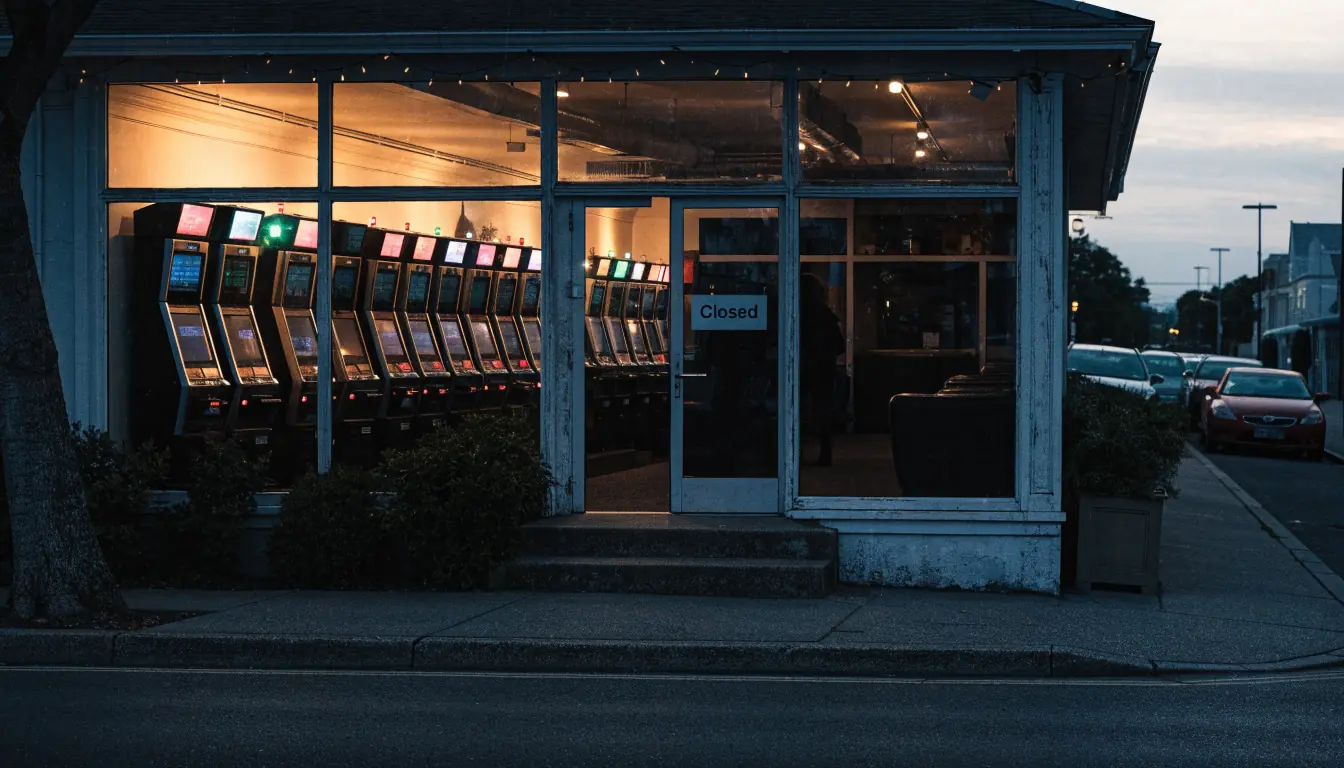
In NSW, the legal age for gambling on poker machines is 18. Venues must check identification for poker-machine gambling; attempting to play below the legal age can have legal consequences. The state also requires players to set a loss limit before playing through mandatory pre-commitment systems. These protections set conditions around play, rather than certifying any particular machine or venue.
Cashless systems do not change the basic risks of gambling. A session budget should be set in advance and kept within what the player can afford to lose. Chasing losses or raising bets to win them back can turn a bounded session into a larger loss. The machine keeps no account of what has already happened.
That is the less glamorous part of the terminology. A payment method is not a recommendation, and a Newcastle address is not a measure of a game’s value.
What is the legal age to play pokies in NSW?
You must be at least 18 to play poker machines in NSW. Players also set a loss limit before playing under the state’s mandatory pre-commitment system.
How does region blocking work?
Casinos or game providers can use your IP address to identify your location and block access from excluded countries. Blocked games may not appear in the lobby or may fail to load for Australian IP addresses.
What are the bonuses and wagering requirements?
Free-spin winnings must be wagered 30 times before withdrawal, and pokies typically count 100% toward wagering requirements. Buy-bonus games let players pay a set amount—usually 50 to 100 times their stake—to enter a bonus round directly.
Created by the ”Golden Star Casino” editorial team.